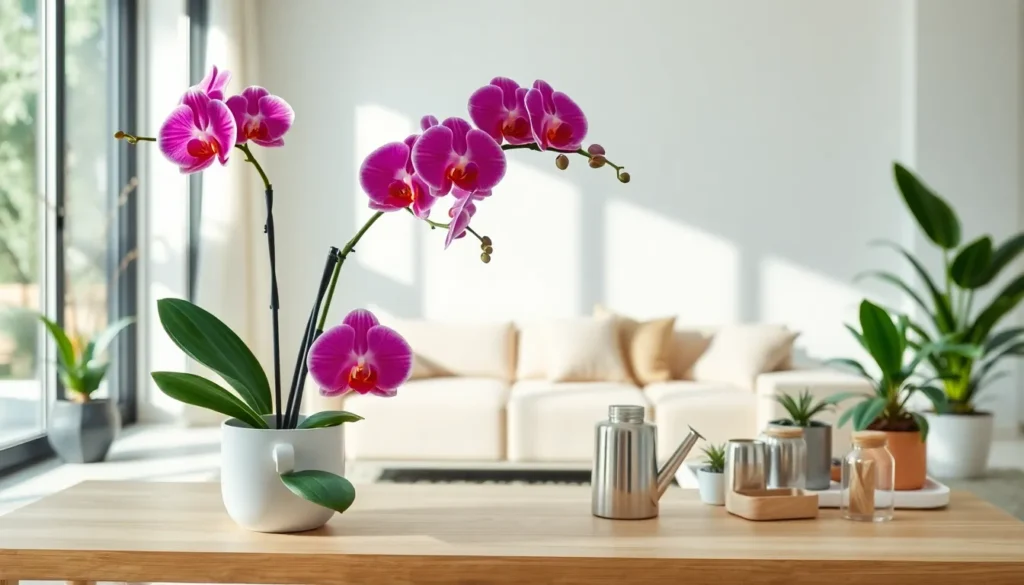
Orchids might look like they belong in a fancy hotel lobby, but with the right care, they can make your home just as glamorous. These beauties come in sleek designs and a variety of colors, making them the diva of houseplants. If you’ve ever thought your thumb was a little too green for these flowers, fear not. This guide will turn you into an orchid whisperer. So, grab your watering can and let’s immerse.
Understanding Orchid Types

Not all orchids are created equal, and understanding the different types is the first step in caring for them. Two of the most common varieties are Phalaenopsis, also known as the moth orchid, and Cymbidium. Phalaenopsis is great for beginners due to its hardy nature and long-lasting blooms. On the other hand, Cymbidium tends to be a bit more temperamental but rewards you with vibrant colors and stunning flowers.
Recognizing these types helps in tailoring care to each orchid’s needs. Other notable mentions include Dendrobium and Cattleya. Each of these varieties has unique characteristics and preferences. For instance, Cattleyas thrive on more light compared to their Phalaenopsis cousins. Knowing your orchid type keeps you one step ahead, ensuring you can provide the specific care they crave.
Ideal Growing Conditions
Orchids adore warmth and humidity, just like you do when you’re dreaming of vacationing in Hawaii. Maintaining the right temperature is crucial: most orchids prefer a nice warm 65-75°F during the day and around 10 degrees cooler at night. They also love humidity, aim for about 40-70%. If your home is drier, consider using a humidity tray or a misting system to keep them comfy.
Light is another important factor. Orchids generally thrive in bright, indirect sunlight. A window with filtered light is an ideal spot. But, be cautious of direct sun rays: these can scorch their delicate leaves. Positioning your orchid a few feet away from the window usually hits the sweet spot, allowing them to soak up just the right amount of light.
Watering Techniques
Watering orchids can feel like trying to solve a Rubik’s Cube after a few cocktails. It can be tricky. The key here is to avoid overwatering, which is the primary killer of orchids. Generally, watering every week or so is sufficient, but factors such as your home’s humidity and the type of pot you’re using can make a difference.
To water, simply run lukewarm water over the pot and let it drain completely. Or, if you’re using a clear pot (which is great for orchids), check the roots. If they appear silvery, it’s time for a drink. If they’re still green, wait a few days longer. A simple habit of checking the roots can save your orchid from drowning.
Fertilizing Your Orchid
Fertilizing orchids might sound like rocket science, but it’s more of a straightforward cooking recipe, 1 part patience, 1 part knowledge, and a dash of the right mix. Orchids appreciate a balanced, water-soluble fertilizer with equal parts nitrogen, phosphorus, and potassium. Look out for products labeled as orchid food: they’re specially formulated to cater to these blooming beauties.
Applying fertilizer during the growing season (spring and summer) promotes healthy blooms. Everything from once every couple of weeks to monthly feeding can work wonders, but keep an eye out for signs of over-fertilization, like yellow leaves. In the fall and winter, cut back on fertilizing as your orchid enters a dormant phase.
Repotting an Orchid
Repotting can feel daunting. But, it’s an essential task to ensure your orchid thrives. Generally, repot your orchid every one to two years or whenever you notice signs of overcrowding. This often happens when you see roots coming out of the pot or if the potting media begins to break down.
When repotting, choose a container that’s slightly larger than the current one and use a potting mix made specifically for orchids. This usually consists of bark chips, moss, or perlite, which allows for proper drainage and airflow. Remove any dead roots, gently separate healthy roots, and secure the orchid into its new pot, ensuring it sits at the same depth as before. This process will keep your plant happy and healthy.
Common Problems and Solutions
Every expert faces challenges, and orchid care is no different. Common problems include yellow leaves, stunted growth, or pests such as aphids and mealybugs. Yellow leaves often indicate overwatering, as the roots can’t breathe and start to rot. If you encounter this, take a step back and reassess your watering schedule.
Stunted growth can stem from insufficient light. Redirect your orchid to a brighter location while ensuring it remains shielded from direct sunlight. If pests invade, treat your orchid with insecticidal soap. A careful inspection and prompt action can help keep your orchid thriving and beautiful.