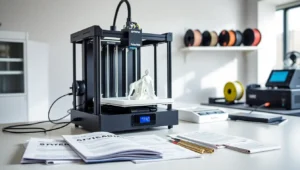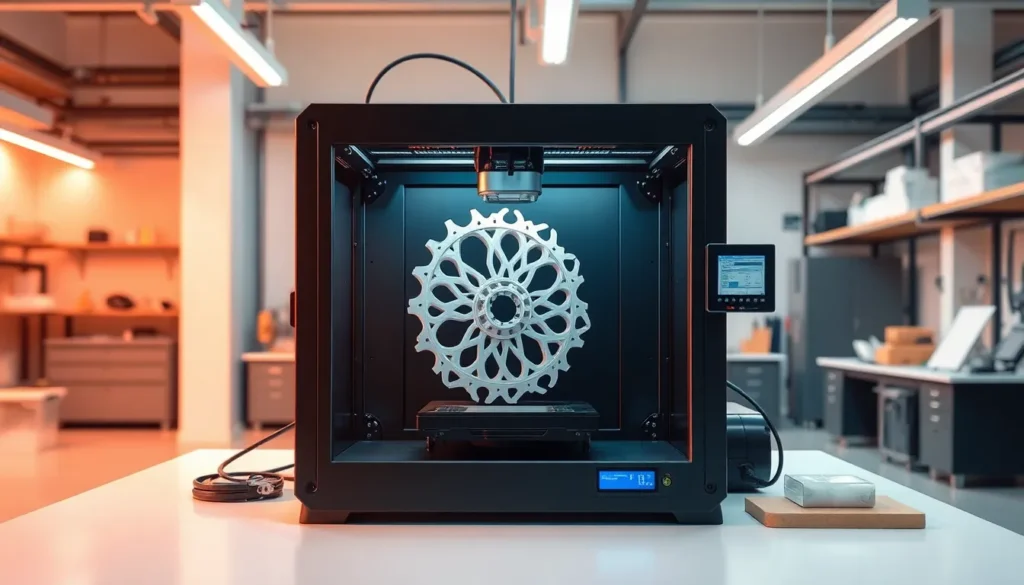
Additive manufacturing, or 3D printing for those who prefer not to sound like a robot, is set to revolutionize the way we create. Imagine a world where your wildest design dreams can materialize in a matter of hours, not weeks. From custom prosthetics to intricate aerospace components, the future is looking bright—and a little bit wacky.
Overview of Additive Manufacturing
Additive manufacturing, or 3D printing, revolutionizes how products are designed and produced. This process creates objects layer by layer, allowing for intricate designs that traditional methods can’t achieve. Several materials, including plastics, metals, and composites, are compatible with additive manufacturing techniques.
Basic technologies in additive manufacturing include fused deposition modeling (FDM), selective laser sintering (SLS), and stereolithography (SLA). FDM uses a thermoplastic filament that melts and extrudes through a nozzle, forming layers. SLS employs lasers to fuse powdered materials, creating durable parts. SLA utilizes ultraviolet light to cure liquid resin into solid shapes, ensuring high precision.
Businesses across various sectors adopt additive manufacturing for benefits like reduced waste and shorter production times. Automotive manufacturers leverage this technology to create lightweight components quickly. Healthcare professionals utilize 3D printing to develop custom implants and prosthetics tailored to individual patients.
Prototyping also sees significant improvements with additive manufacturing. Designers can produce prototypes faster and at lower costs, enabling rapid iteration and testing. Educational institutions increasingly incorporate 3D printing into curricula, preparing students for future careers in engineering and design.
Market trends indicate that additive manufacturing will continue expanding in various industries. Analysts predict the global 3D printing market may reach $34 billion by 2024, demonstrating increasing investment and interest. As materials and technologies advance, additive manufacturing is set to play a crucial role in the future of manufacturing, enhancing efficiency and innovation.
Current Trends in Additive Manufacturing
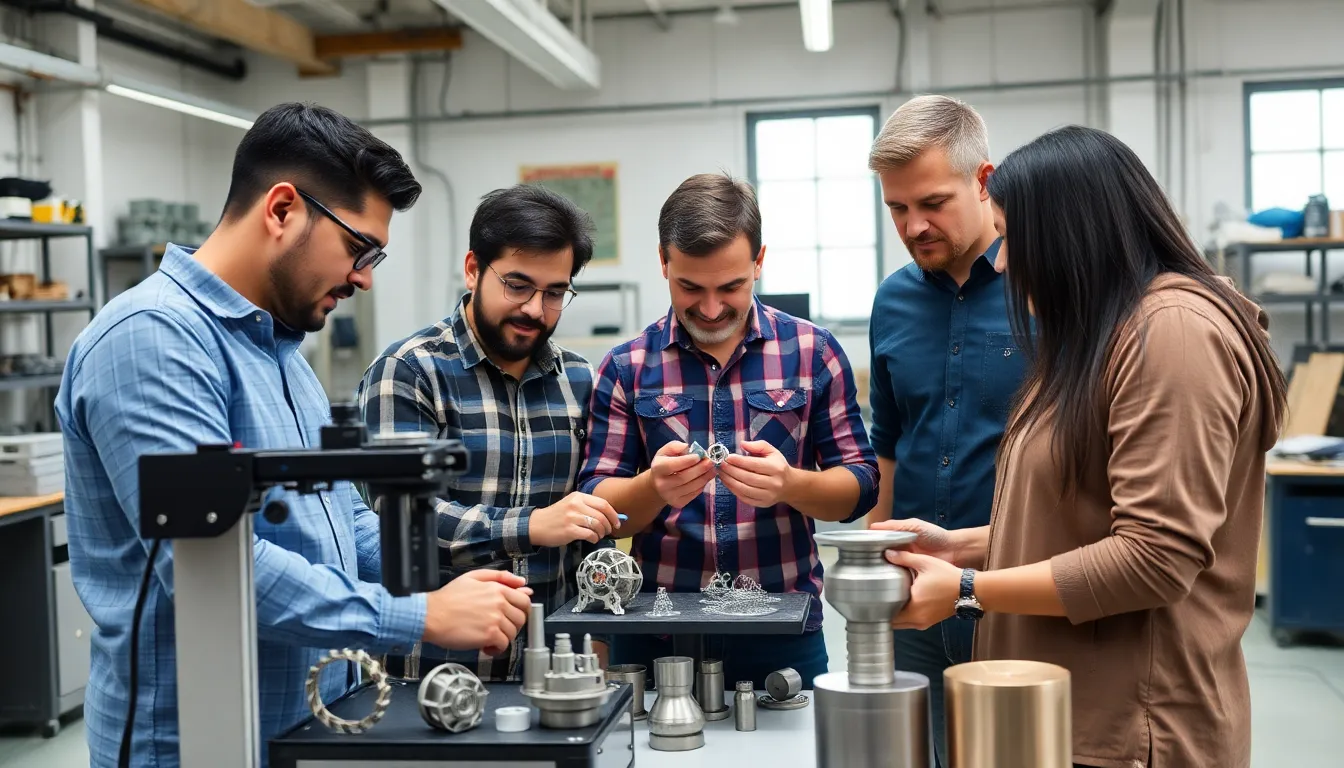
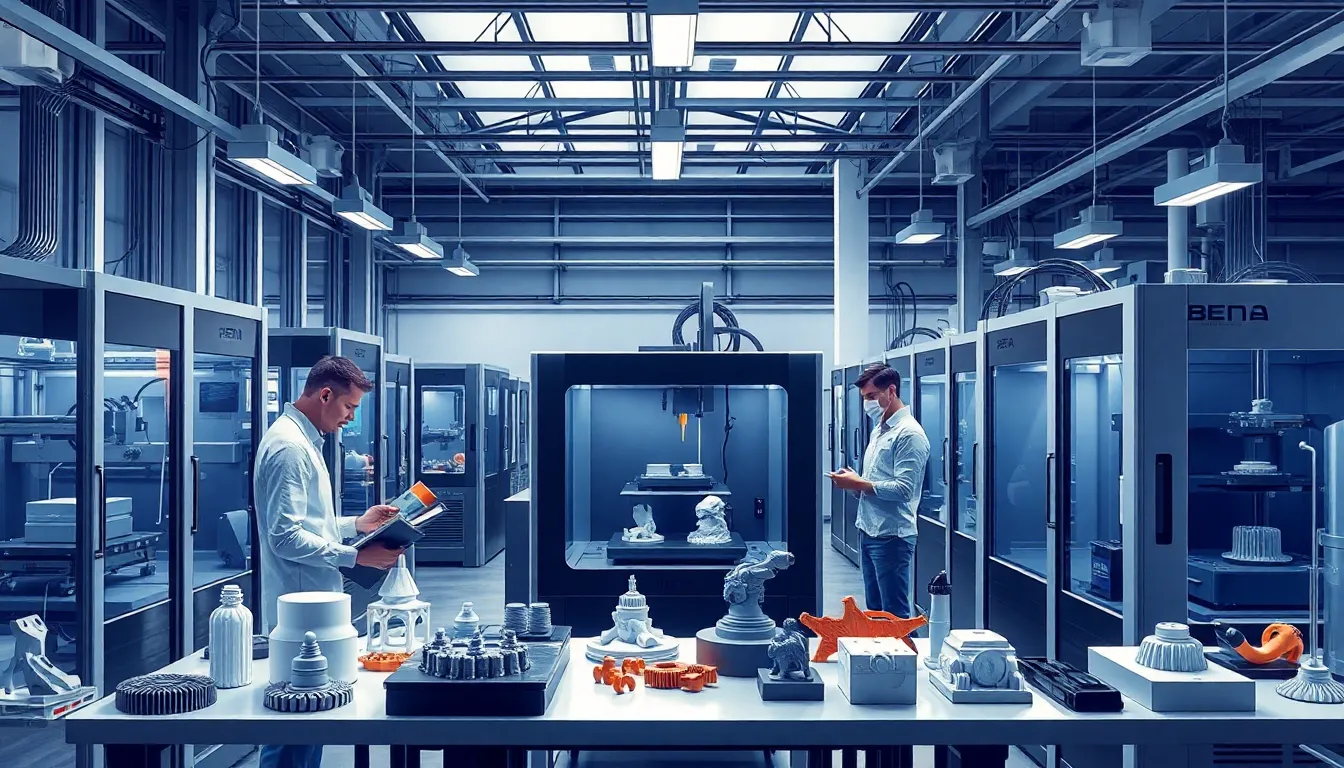
Technological advancements in additive manufacturing continually reshape the landscape. Innovations include enhanced material capabilities, allowing the use of metals and composites that were previously difficult to print. Technologies such as multi-jet fusion and digital light processing enable faster production times and improved accuracy. Machine learning integration further optimizes processes, enhancing efficiency and reducing errors.
Industry adoption escalates as various sectors recognize the potential of additive manufacturing. Aerospace companies leverage this technology to produce lightweight, complex parts that improve fuel efficiency. In healthcare, professionals utilize 3D printing for custom implants that meet individual patient needs. According to recent reports, industries investing in additive manufacturing expect a significant return on investment within the first year. The automotive sector increasingly turns to 3D printing for rapid prototyping, enabling quicker time-to-market for new models.
Challenges Facing the Future of Additive Manufacturing
Additive manufacturing faces several challenges that could impact its growth and implementation in various sectors.
Material Limitations
Material limitations present a significant hurdle for additive manufacturing. Current 3D printing technologies primarily utilize plastics, metals, and composites. Certain metals and composites remain difficult to print due to their unique properties. The need for improved material options is critical for expanding application ranges. Researchers are actively exploring new materials, including biocompatible compounds for healthcare and advanced composites for aerospace. Breakthroughs in material science can enable the production of stronger, lighter, and more durable components. Innovations such as these enhance the potential of additive manufacturing across industries.
Regulatory and Standards Issues
Regulatory and standards issues pose challenges that can hinder widespread adoption of additive manufacturing. Regulatory bodies have yet to establish comprehensive guidelines specific to 3D printing technologies. This lack of standardized protocols complicates compliance for manufacturers, especially in highly regulated industries like aerospace and healthcare. Without consistent quality assurance measures, customer confidence may diminish. Organizations are advocating for the development of robust frameworks that govern the safety, quality, and interoperability of additive manufacturing processes. Establishing these standards fosters industry growth and facilitates broader acceptance in diverse markets.
The Future of Additive Manufacturing
Additive manufacturing continues to reshape the landscape of production, paving the way for innovative possibilities and opportunities across various sectors.
Predictions and Opportunities
Market analysts forecast that the global additive manufacturing market could exceed $34 billion by 2024. New techniques will likely emerge, enhancing production efficiency while reducing costs. Growth in industries such as healthcare and aerospace creates demand for customized solutions, prompting more research and investment. As material capabilities improve, manufacturers will find opportunities for creating lighter, stronger parts that traditional methods struggle to achieve. Additionally, deeper integration of artificial intelligence in design and production processes could significantly decrease errors in creation. Users will also notice faster turnarounds in both prototyping and final products.
Impact on Various Industries
The automotive sector demonstrates significant advancement through additive manufacturing, with companies rapidly developing new models using 3D printing for lightweight components and prototypes. Aerospace benefits from the ability to create complex geometries that enhance performance at reduced weights. Healthcare professionals increasingly utilize 3D printing for patient-specific implants and prosthetics, tailoring solutions for individual needs. This technology streamlines supply chains, minimizing waste while ensuring faster production times. Education systems are also adapting, incorporating additive manufacturing into curricula to prepare students for future roles in engineering and design. As industries embrace these technologies, the demand for specialized skills will likely rise, emphasizing the importance of training in this evolving field.
The future of additive manufacturing is bright and full of potential. As industries continue to embrace this technology, they’ll unlock new possibilities for innovation and efficiency. The advancements in materials and techniques will further enhance production capabilities, allowing for unprecedented design freedom and customization.
With increasing investments and interest, the landscape of 3D printing is evolving rapidly. Educational institutions are preparing the next generation for careers in this dynamic field, ensuring a skilled workforce ready to tackle emerging challenges.
As additive manufacturing becomes more integrated into various sectors, it’s clear that this technology will not only reshape manufacturing but also drive significant advancements across multiple industries. The journey ahead promises to be transformative, pushing the boundaries of what’s possible in design and production.